
Michigan Pharmacy Students Help Initiate Executive Order Expanding Pharmacists’ Role During Pandemic
March 26, 2020
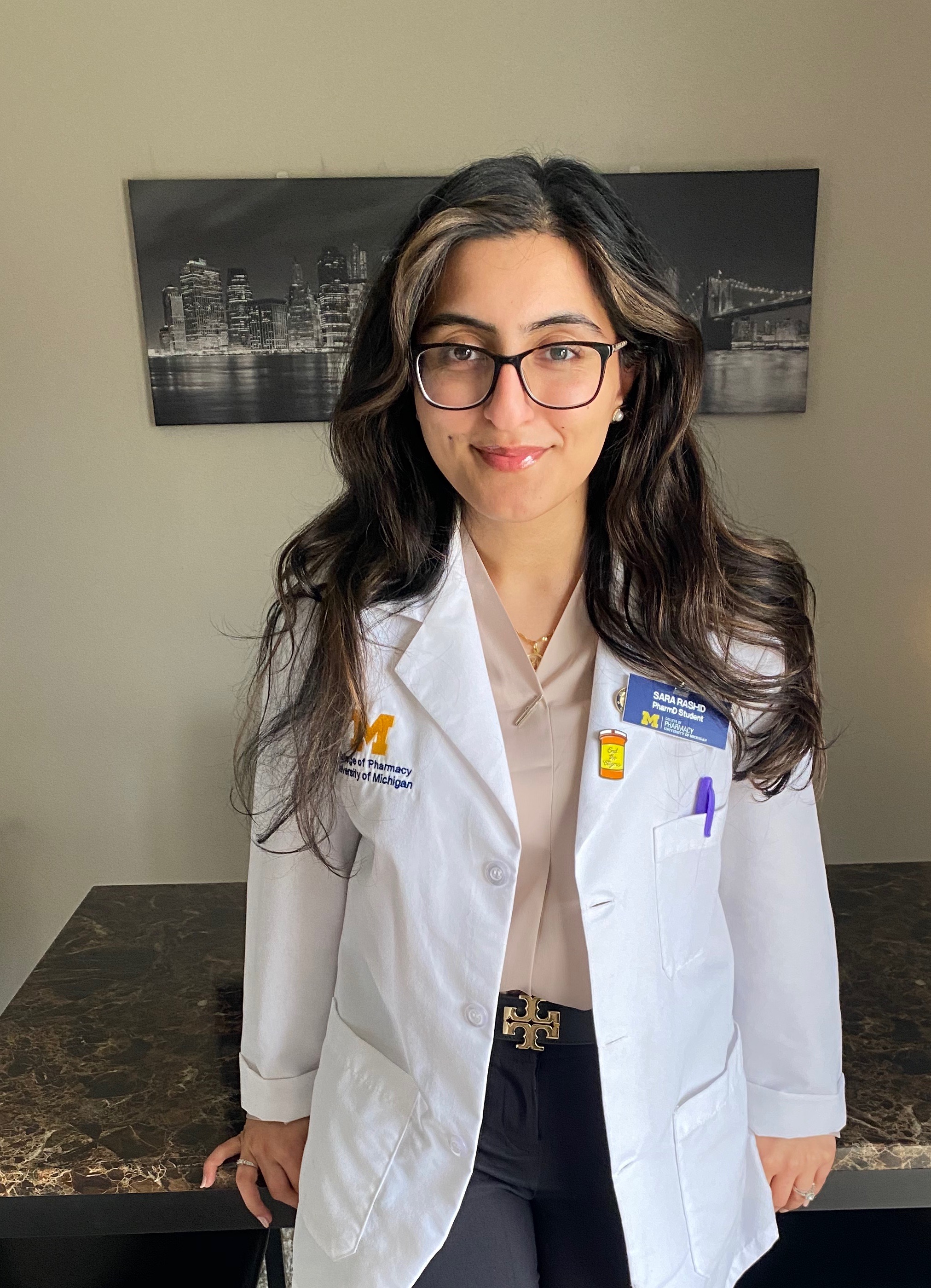
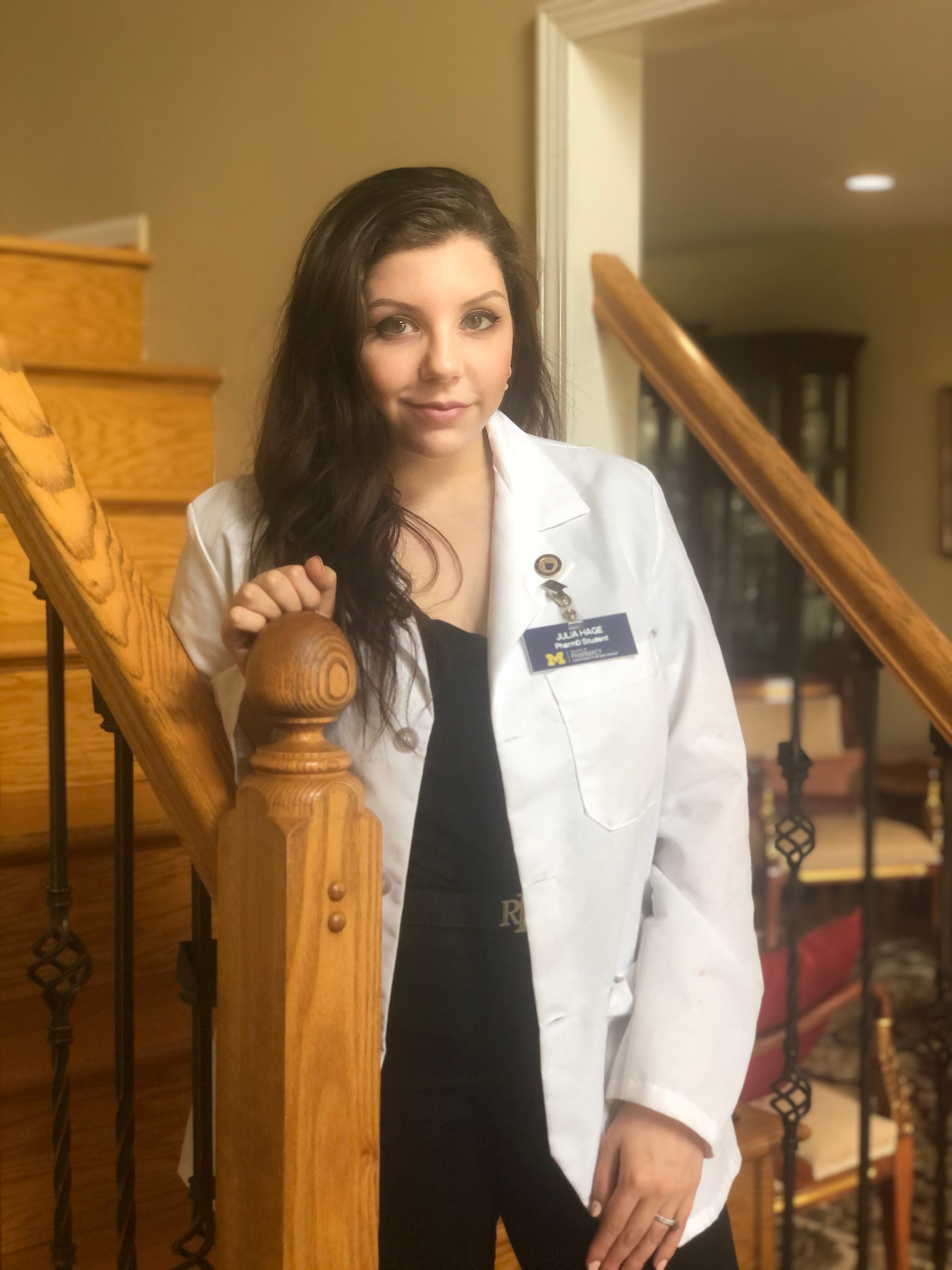
As the novel coronavirus impacts healthcare across the world, two Michigan Pharmacy P2 students saw a way they could help alleviate the strain in their own backyard.
Julia (Hage) Nahle and Sara Rashid developed a proposal that contributed to Executive Order 2020-25, signed by Governor Gretchen Whitmer on March 25. The order will allow pharmacists to dispense emergency refills of prescriptions for up to 60 days’ worth of supply for patients and require insurers to cover these emergency refills during the ongoing coronavirus pandemic.
Executive Order 2020-25 takes effect immediately and ends on April 22, but could be renewed as needed.
With the help of Jamele Hage, JD, and Michigan Board of Pharmacy member Maria Young, BSPS, Julia and Sara contacted Gov. Whitmer’s office, pushing for the State of Michigan to grant pharmacists a larger role in optimizing patient care during this pandemic.
“This is a huge first step in the expansion of pharmacists’ roles in patient care, but we are nowhere close to being done,” explained Julia.
“Next steps include: extending the life of this Executive Order beyond April 22nd and pushing for our full proposal to be reconsidered (POC testing, pharmacist reimbursement, and independent vaccinations),” continued Sara.
Both students agreed, “we cannot say we ‘will be done,’ because current and future pharmacists must never stop advocating for the profession. However, our ultimate goal is to see our recommendations enacted into laws.”
“No Michigander should be worried about running out of critical medications during the COVID-19 pandemic, which is why I signed this Executive Order authorizing pharmacists to refill up to 60 days of medication for their patients and easing restrictions on pharmacists so they can continue to help their patients during this crisis,” said Governor Whitmer in a release. “Residents who are limiting their time in public places and practicing social distancing shouldn’t have to fear running low on their prescription drugs during these trying times.”
The Executive Order only applies to non-controlled substances. Pharmacists will also have the discretion to substitute therapeutically equivalent medications without prescriber approval if there are critical shortages.
“This Executive Order will ease a burden on seniors and families worried about maintaining a supply of medication for themselves or their children,” said Dr. Joneigh Khaldun, Chief Medical Executive and Chief Deputy Director for Health at the Michigan Department of Health and Human Services. “We continue to urge Michiganders to practice social distancing if they are out in public and to wash their hands with soap and water or use hand sanitizer regularly to help stop the spread of COVID-19.”
Latest News
University of Michigan Celebrates Grand Opening of New College of Pharmacy Building, Advancing the Future of Healthcare Education
August 28, 2026
Media Contact: Kylie Rydjord, Contact and Marketing Communications Manager, [email protected]
ANN ARBOR, Mich. — As part of its 150th anniversary celebration, the University of Michigan College of Pharmacy today celebrated the grand opening of its new six-floor, 142,000-square-foot building. A state-of-the-art facility designed to transform pharmacy education, research and collaboration for generations to come.
Nearly 700 alumni, […]
InterActions: A Lasting Reflection of Michigan Pharmacy
August 18, 2026
When the University of Michigan College of Pharmacy began designing its new home, every detail was considered with purpose — from innovative research spaces to collaborative areas where students, faculty, alumni and visitors could connect.
The building itself was envisioned as more than a place to learn and discover. It would also tell the story of […]
Ashley Kuzmik: Bridging the Gap Between Hospital and Home
August 10, 2026
For many families, the transition from hospital to home after a loved one with dementia is discharged can be overwhelming. New medications, changing symptoms, mobility challenges and the demands of caregiving often converge all at once, leaving families to navigate an already difficult journey. Helping make that transition easier is at the heart of Ashley […]