
InterActions: A Lasting Reflection of Michigan Pharmacy
August 18, 2026
When the University of Michigan College of Pharmacy began designing its new home, every detail was considered with purpose — from innovative research spaces to collaborative areas where students, faculty, alumni and visitors could connect.
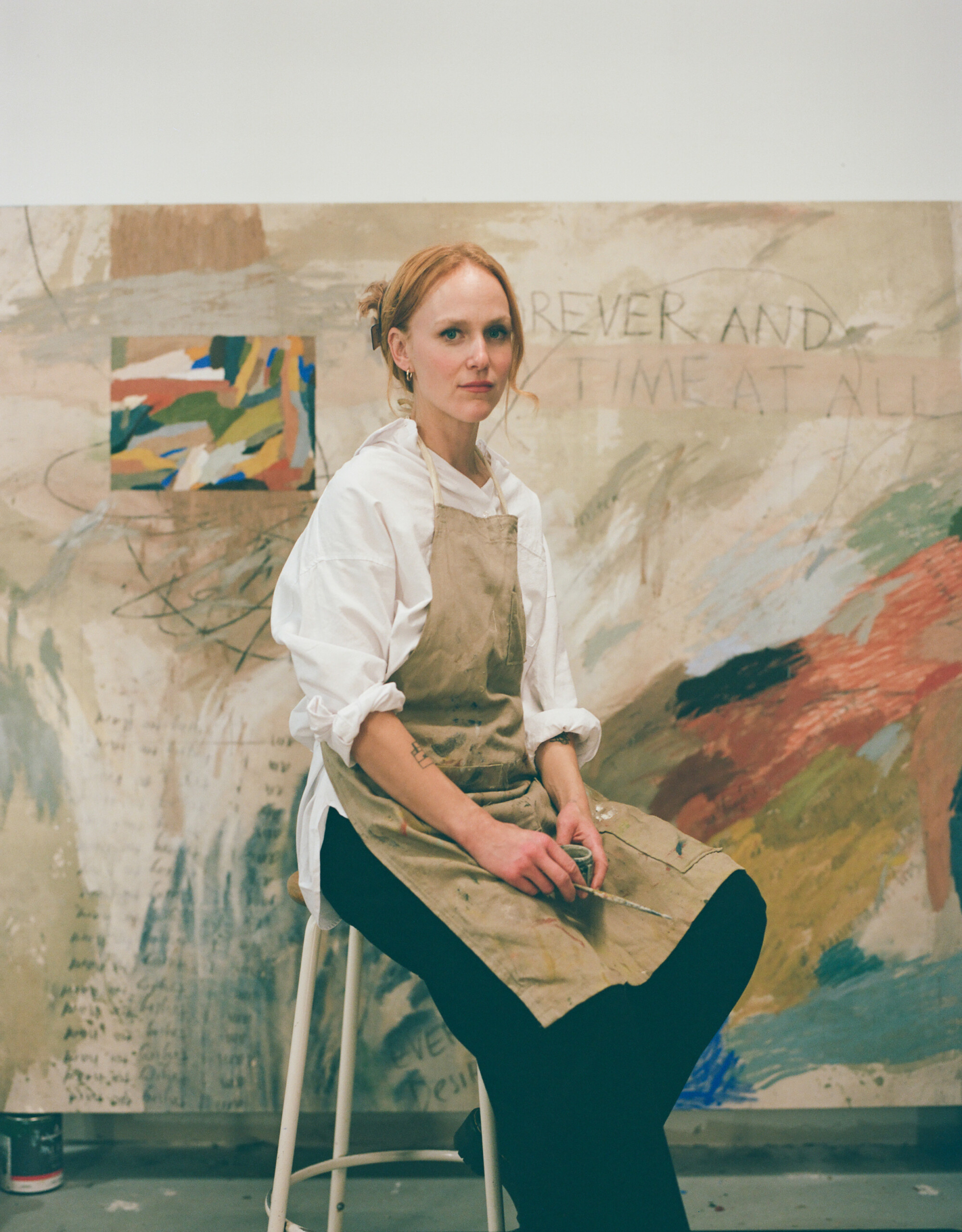
The building itself was envisioned as more than a place to learn and discover. It would also tell the story of the College, its people and its impact. That vision inspired the commissioning of InterActions, a permanent mural by University of Michigan STAMPS alumna and artist Ellen Rutt.
Made possible by the generosity of Sheldon and Ellen Rich and Deborah Wagner, the mural was funded through the College’s Interior Experience and Preservation Fund, which supports enhancements to the College’s facilities, including its growing art collection. The project was completed in collaboration with the University’s President’s Advisory Committee on Public Art (PAConPA), whose mission is to enrich the university’s campuses through works of art of the highest caliber that inspire learning, discovery and community.
Today, InterActions serves as a visual centerpiece of the College’s new building, a work of art that celebrates pharmacy’s past, present and future while welcoming everyone who walks through its doors.
A Name Rooted in College History
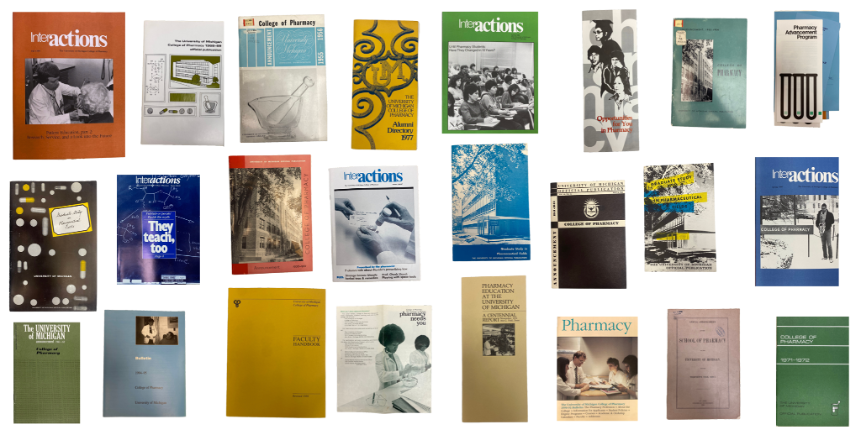
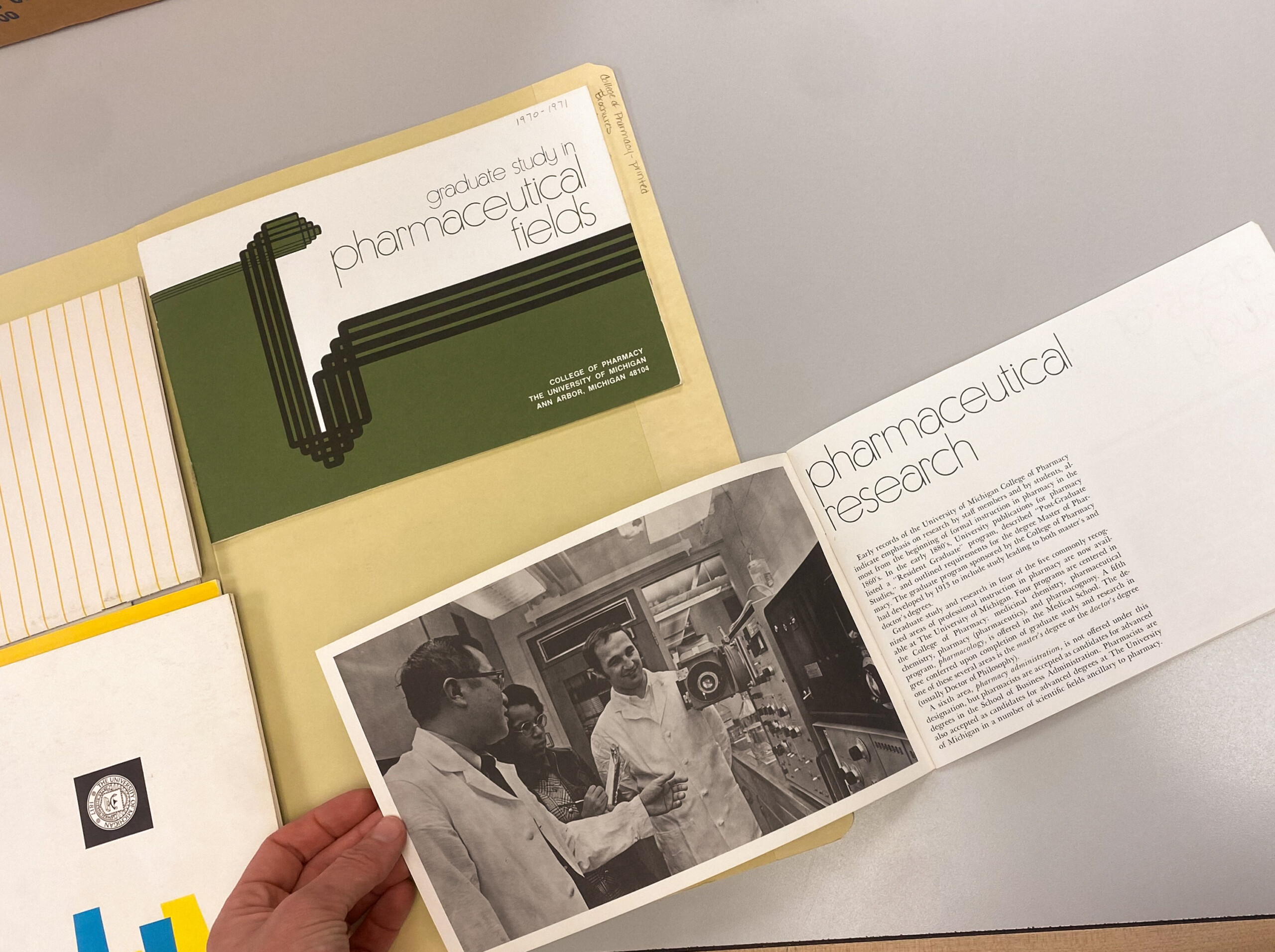
The mural’s title, InterActions, pays tribute to the College’s former publication, honoring a long tradition of sharing knowledge, celebrating achievements and building community.
Just as the publication connected generations of Michigan Pharmacy students, faculty, staff and alumni, the mural celebrates the connections that define the profession itself: research, practice, discovery and education.
Even the mural’s color palette is drawn from the covers of past InterActions publications, grounding the artwork in a visual history that already belongs to the College.
Creating a Mural That Belongs to Michigan Pharmacy
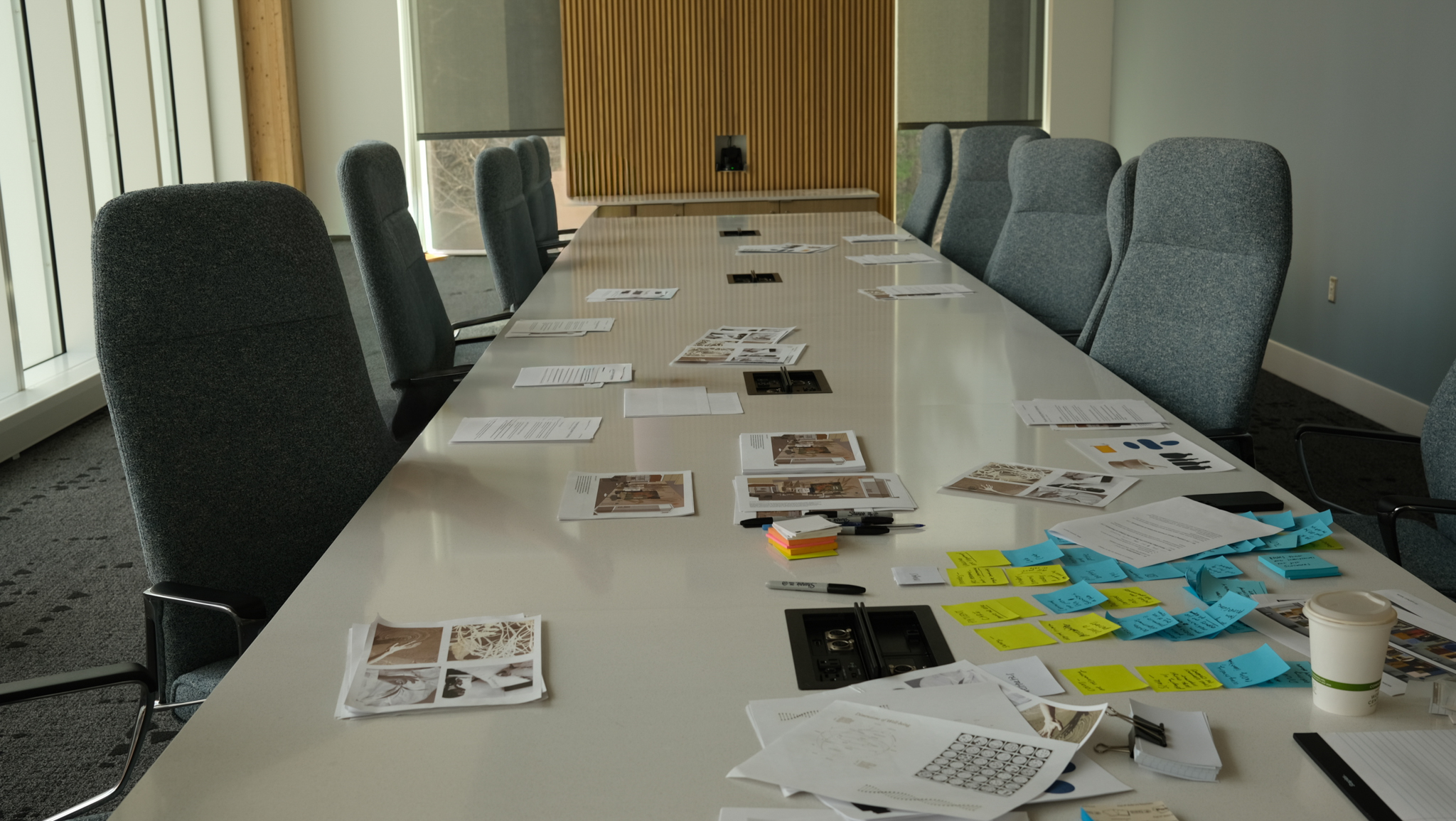
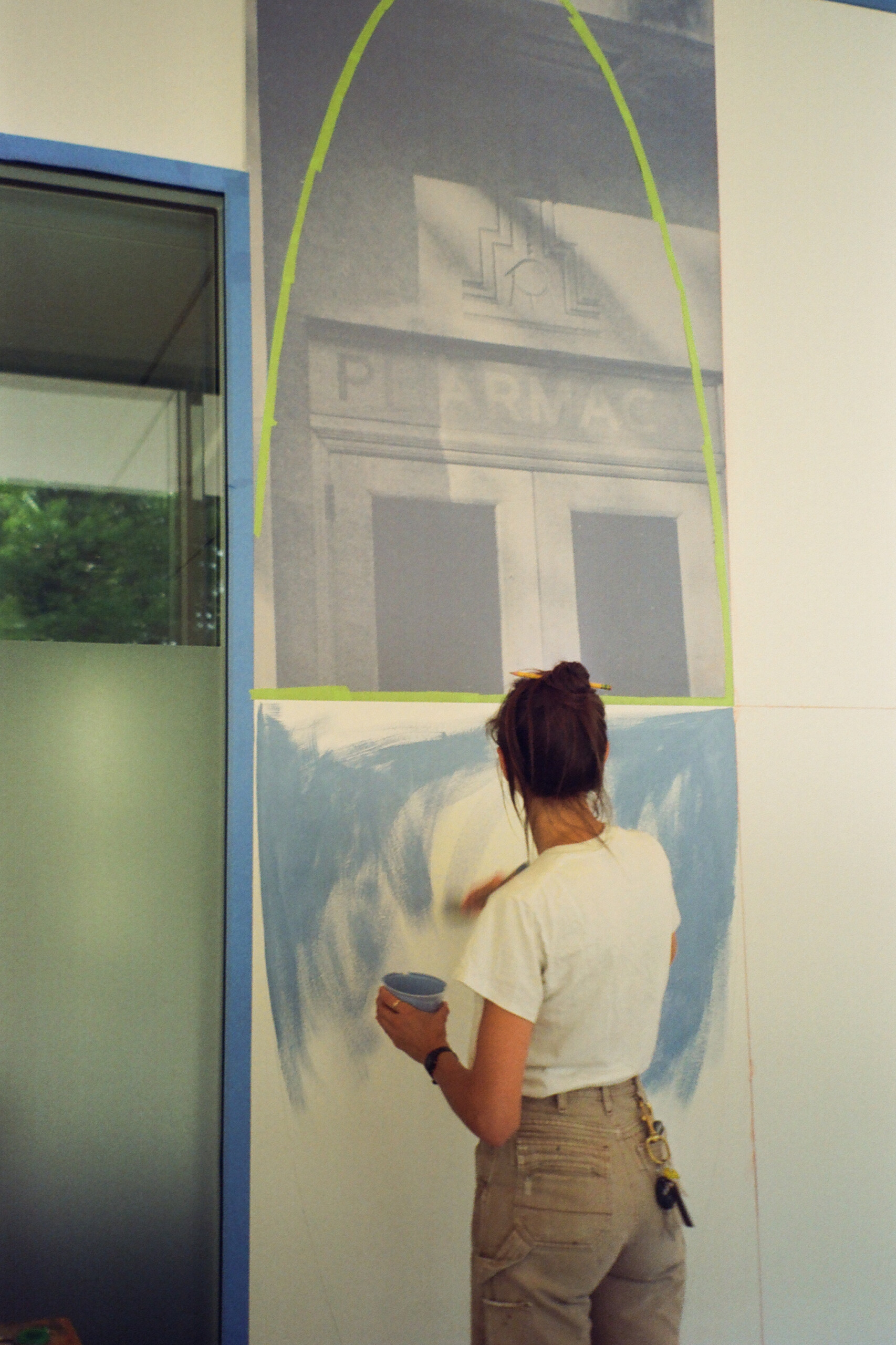
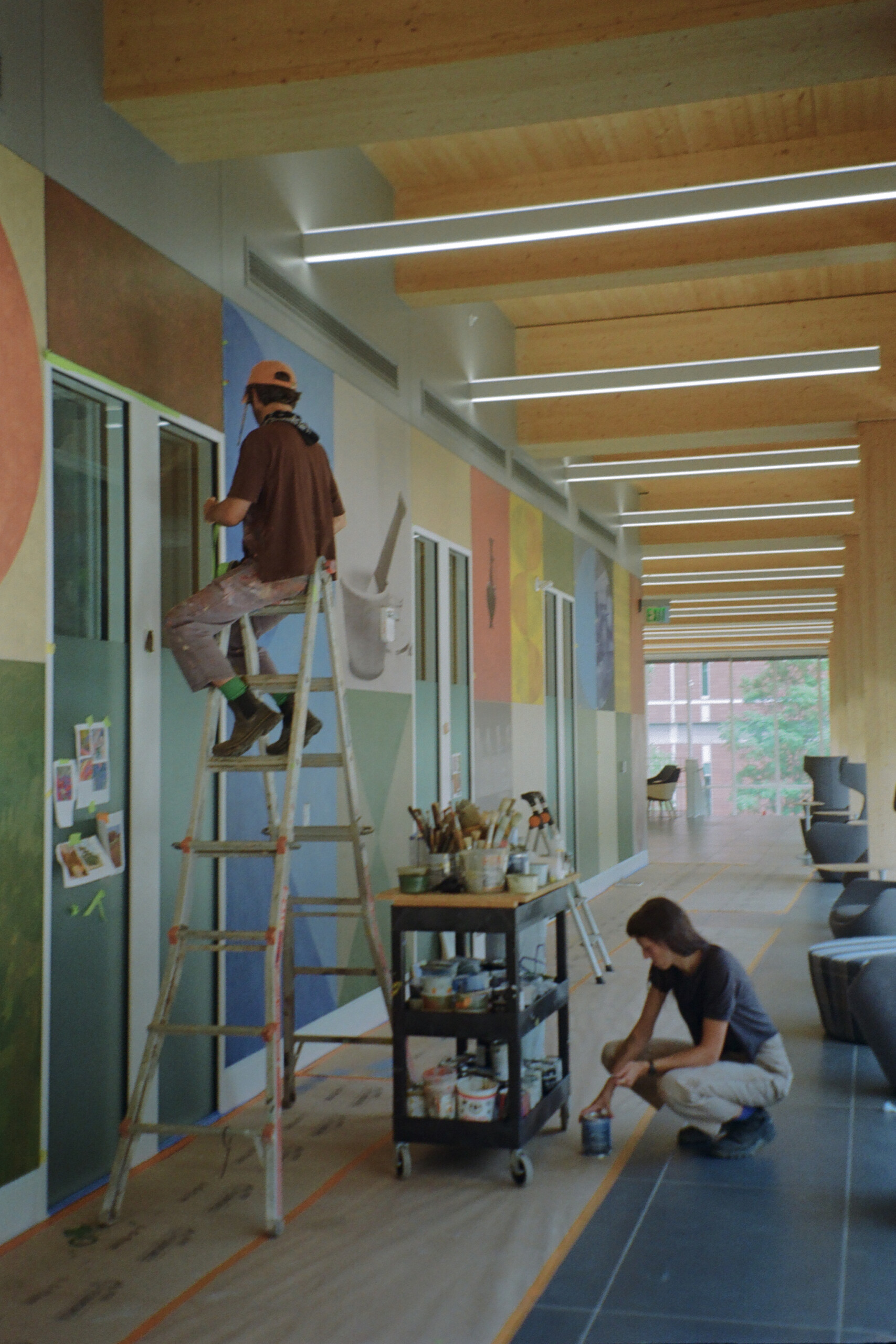
Rather than arriving with a finished concept, Ellen began by listening. She facilitated research sessions with faculty, staff and students, inviting them into conversations about what pharmacy means, how the profession has evolved and what they hoped future generations would see reflected in the College’s newest academic space.
Participants discussed questions including:
- What has remained true about pharmacy throughout its history?
- What aspects of the profession are often overlooked by the public?
- How can a work of art represent both scientific discovery and compassionate patient care?
Those conversations became the foundation of the mural as several themes consistently emerged.
Participants described care as the thread connecting every area of pharmacy, emphasizing the pharmacist’s role as one of the most accessible healthcare professionals and a trusted advocate for patients.
They also spoke about the disconnect between public perception and the reality of the profession. While many people associate pharmacy primarily with a retail counter, faculty and students described a much broader field encompassing drug discovery and delivery, precision medicine, outcomes research and being on interdisciplinary healthcare teams.
Another recurring theme was the journey from plant to patient — the remarkable process of transforming discoveries from the natural world into life-changing therapies.
Finally, participants encouraged Rutt to create something timeless. Rather than depicting current technologies or trends, they wanted a mural that would remain meaningful for decades and reflect both sides of the College’s identity: pioneering research and exceptional clinical care.
A Story Told in Two Layers
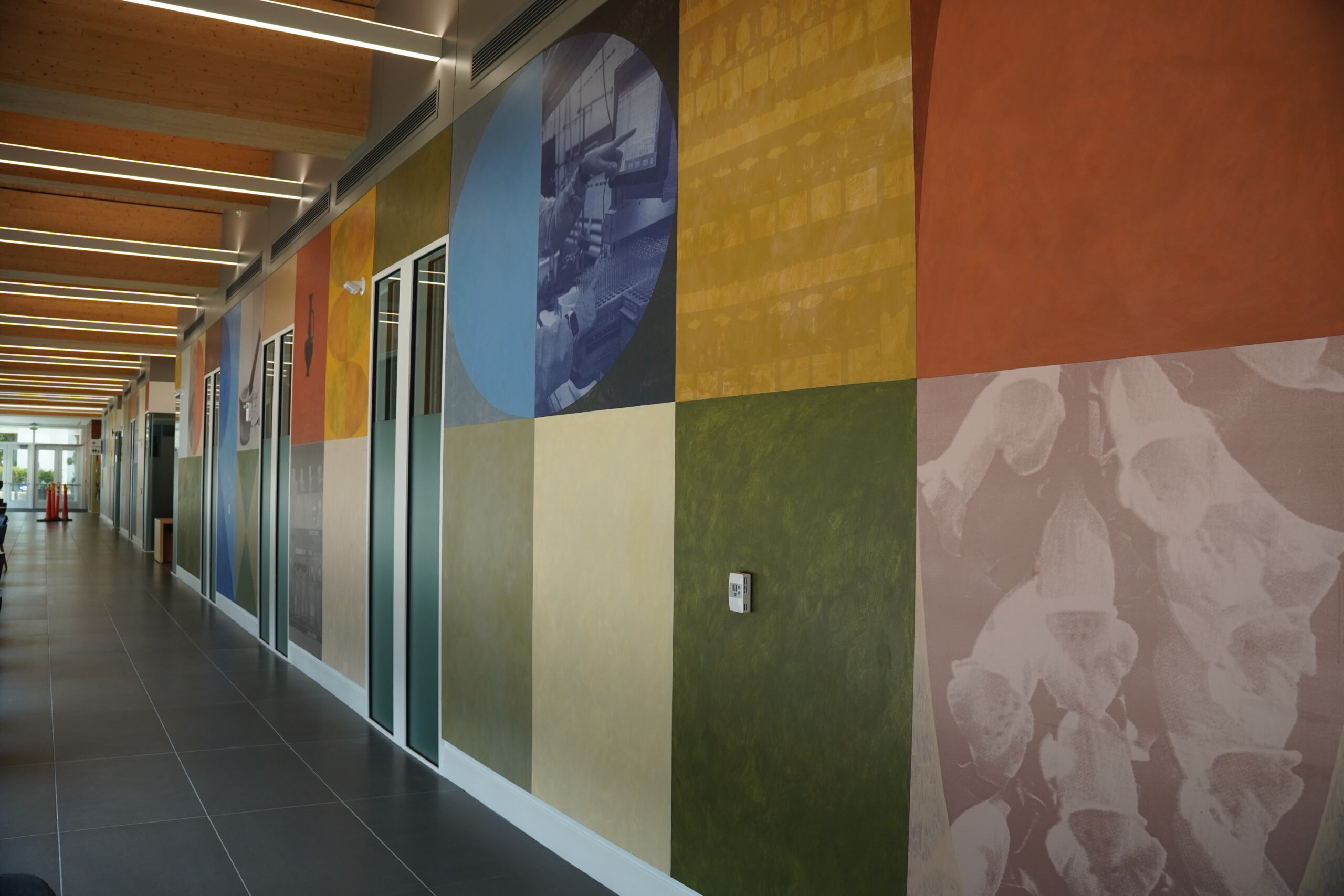
Those conversations ultimately shaped InterActions, a mural designed to reveal itself over time. From a distance, visitors first encounter sweeping fields of bold color and large-scale abstract forms that create an immediate sense of energy and movement. As they move closer, a second layer emerges.
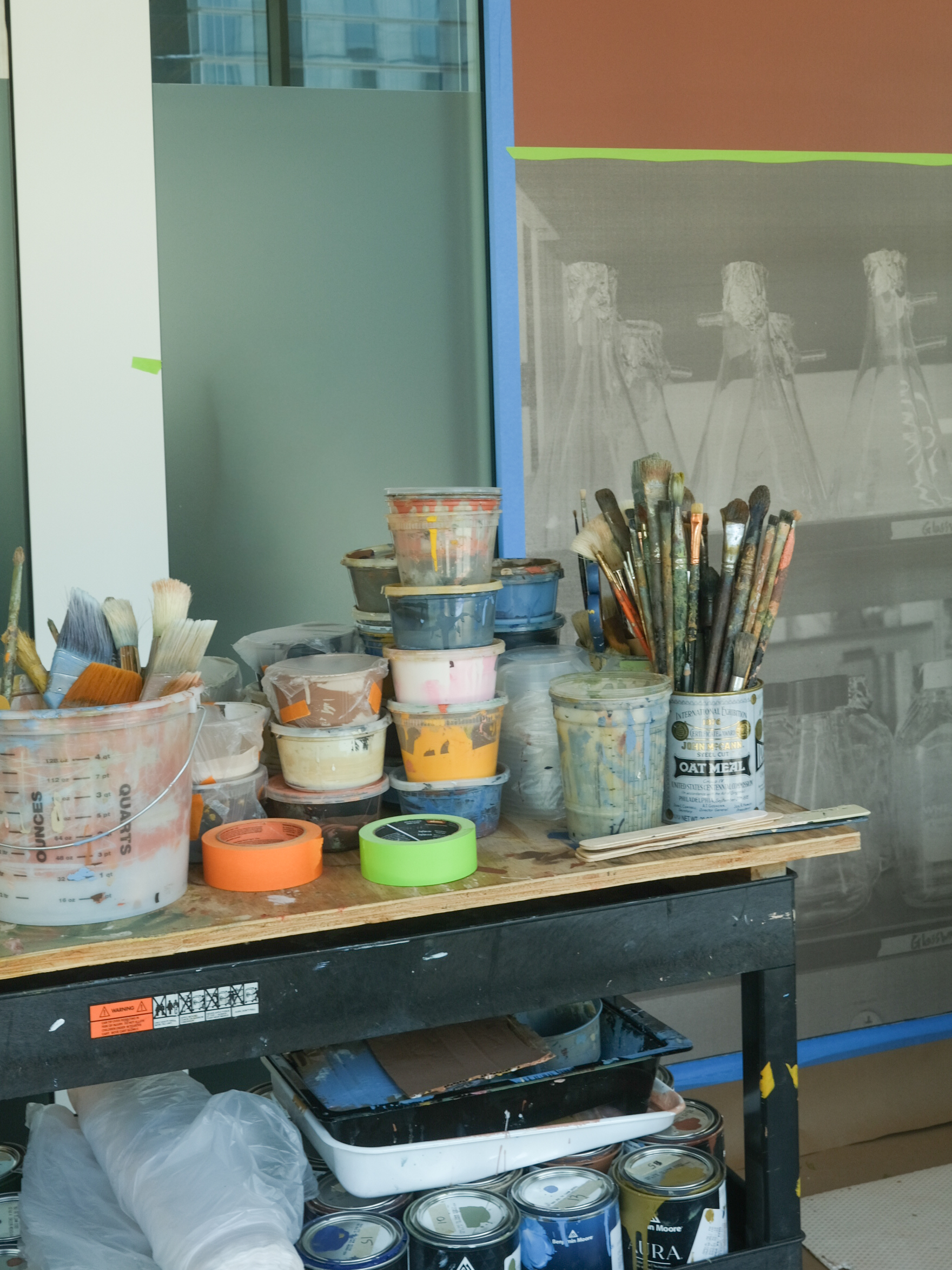
Detailed illustrations, botanical references, gestures of care, iconic symbols, moments from pharmacy’s history and other hidden imagery reward careful observation. The mural invites viewers to slow down, discover new details and return again and again.
Among its many surprises are the subtle “Rx” symbol hidden throughout the artwork — just one of the small discoveries waiting to be found.
The Meaning Behind the Capsule
One visual element appears throughout the mural: the oval and capsule shape. For pharmacists, the capsule is immediately familiar. Within InterActions, however, it becomes something larger than a medication.
Each capsule contains an idea, a discovery, a plant, a historical moment or a human gesture, symbolizing the knowledge and collaboration required to advance healthcare. Together, they represent innovation, discovery, leadership and the interdisciplinary partnerships that define pharmacy.
Every pharmaceutical breakthrough begins with curiosity, collaboration and years of research. The capsule becomes a metaphor for all that is contained within pharmacy itself.
A Lasting Legacy
Public art has the power to shape how people experience a place. For the College of Pharmacy, InterActions transforms a shared space into one that reflects the institution’s history, celebrates its community and inspires future generations.
Thanks to the vision of the University’s President’s Advisory Committee on Public Art, the generosity of donors Sheldon and Ellen Rich and Deborah Wagner, and the voices of the Pharmacy community who helped shape its design, the mural is more than a beautiful addition to the building.
It is a lasting expression of what defines Michigan Pharmacy: discovery, collaboration, compassion and an unwavering commitment to improving human health.
Whether you’re visiting for the first time or passing by every day, InterActions offers something new to discover — a reminder that, much like pharmacy, its greatest impact is found in the connections it creates.
Most Recent Stories
Think Pharmacy Is Just for People? Think Again.
October 8, 2026
When Maddie Pislin first came to the University of Michigan College of Pharmacy, she knew she wanted to be a pharmacist. She just didn’t know yet what that could look like.
Growing up in Hawaii surrounded by dogs, chickens, a turtle and other pets, Maddie had considered becoming a veterinarian. But veterinary pharmacy wasn’t on her […]
Pharmacists Are Like Superheroes: Who is a Pharmacist?
September 23, 2026
Who Is A Pharmacist?
When you think “pharmacist,” you probably picture someone in a white coat, handing you a bag of medicine across the counter and asking if you have any questions about your prescription. We are so lucky to have access to these health care providers on a regular basis, especially after hours when our […]
Jennifer Hagopian on Curiosity, Mentorship and Transplant Pharmacy
August 19, 2026
When Jennifer (Jen) Hagopian, PharmD, BCPS, BCTXP, selected a solid organ transplant APPE as a pharmacy student, she wasn’t planning her future career. She simply wanted to explore an area she didn’t know much about. That one rotation changed everything.
“I just tried to pick things that I didn’t really know too much about,” Dr. Hagopian […]