
University of Michigan College of Pharmacy Researchers Win $2 Million Grant to Develop Bird Flu Drug
January 21, 2026
Media Contact: Lindsay Groth, Executive Director of Marketing and Communications, [email protected]
[Ann Arbor, Michigan] — University of Michigan College of Pharmacy researchers have won a $2 million grant from the US Department of Agriculture (USDA) to develop a drug to treat highly pathogenic avian influenza (HPAI) in birds, and potentially, in humans.
Terra Sztain, Assistant Professor of Medicinal Chemistry at the College of Pharmacy and Tim Cernak, Associate Professor (of Medicinal Chemistry), were awarded the grant from the USDA Poultry Innovation Grand Challenge to develop an avian flu antiviral for poultry that is resilient to the rapid viral mutations that lead to drug resistance. Sztain and Cernak are collaborating with Adam Lauring of the Department of Internal Medicine at Michigan Medicine, who is developing a dataset of thousands of mutants of the virus to help predict how it will mutate in the wild.
Since 2022, a specific subtype of the avian flu virus, H5Nx, has been spreading among farm-raised poultry. It has devastated chicken and turkey flocks, triggered mass culls, disrupted supply chains, and cost billions in lost birds and higher egg prices. There are no approved or recommended antiviral drugs for treating infected poultry; farmers’ only recourse is to try to prevent infections by vigilantly protecting their birds.
The pathogen can mutate rapidly and breach species barriers; it has killed thousands of seals and sea lions worldwide and infected cattle in at least 18 US states. More alarmingly, it has jumped to humans who have come into contact with infected poultry or cattle. The CDC has reported dozens of H5Nx cases in the U.S., although the risk of currently circulating strains is low for the general public. Although medications approved for humans exist, drug resistance evolves rapidly and necessitates a new treatment strategy.
With a combination of lab experiments and sophisticated computer modeling that helps predict mutations, the team is confronting the ability of the virus to evolve around nearly any drug placed in its path. Cernak’s team is developing candidate drugs that can disrupt the virus, using a robotics-driven high-throughput platform driven to synthesize thousands of potential molecules and test them against viral variants.

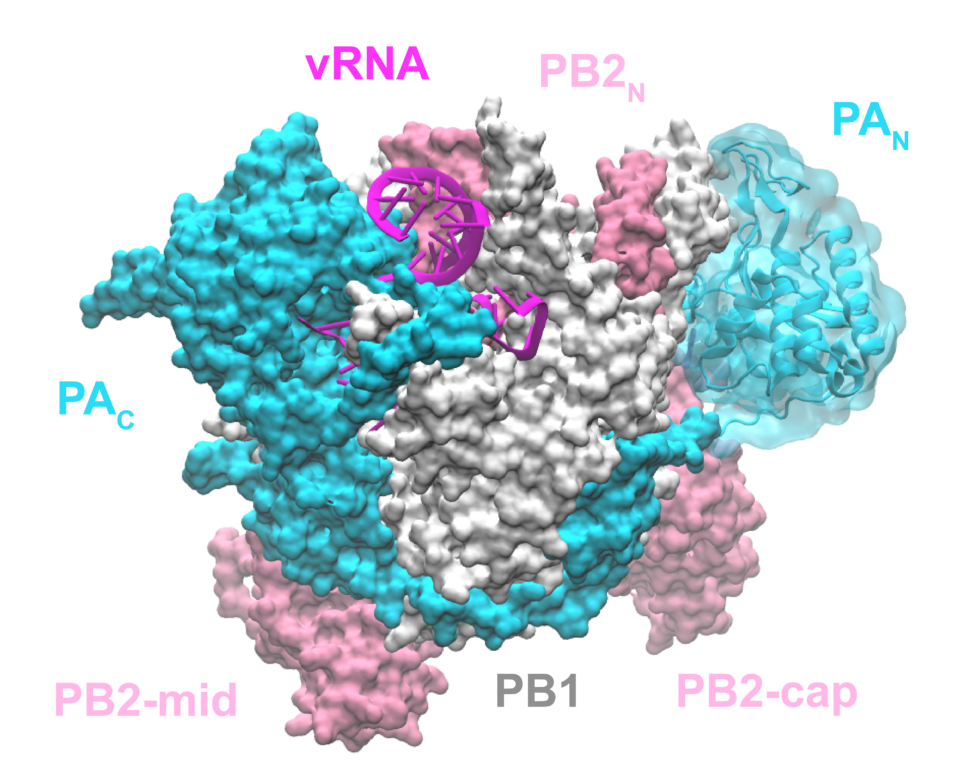
Sztain’s machine learning predictive models help speed the process of matching potential drugs to viral variants. Her work also looks deeply into the structure and dynamics of the viral protein to find hidden pockets that may be responsive to drug therapy.
Ultimately, the team will test 40 of the most promising drugs in chicken and duck liver cells to see which are most effective in preventing the flu.
In a landscape where viral evolution often outpaces a public health response, Sztain’s work represents a proactive model that anticipates resistance, designs drugs to withstand it, and uses computation and experimental biology to stay ahead of a potentially devastating virus.
________________
About the College
The University of Michigan College of Pharmacy has been leading at pharmacy’s edge for 150 years. The first and oldest pharmacy school at a state university, the College — currently ranked #2 in the nation — has and continues to shape education in the field. Its faculty are internationally recognized and are innovators in drug discovery, development and delivery, precision pharmacotherapy, outcomes research, and clinical practice. More than 5,000 alumni are enhancing patient care and outcomes from the bench to the bedside, in boardrooms and communities, government agencies, and within healthcare companies.
Latest News
University of Michigan Celebrates Grand Opening of New College of Pharmacy Building, Advancing the Future of Healthcare Education
August 28, 2026
Media Contact: Kylie Rydjord, Contact and Marketing Communications Manager, [email protected]
ANN ARBOR, Mich. — As part of its 150th anniversary celebration, the University of Michigan College of Pharmacy today celebrated the grand opening of its new six-floor, 142,000-square-foot building. A state-of-the-art facility designed to transform pharmacy education, research and collaboration for generations to come.
Nearly 700 alumni, […]
InterActions: A Lasting Reflection of Michigan Pharmacy
August 18, 2026
When the University of Michigan College of Pharmacy began designing its new home, every detail was considered with purpose — from innovative research spaces to collaborative areas where students, faculty, alumni and visitors could connect.
The building itself was envisioned as more than a place to learn and discover. It would also tell the story of […]
Ashley Kuzmik: Bridging the Gap Between Hospital and Home
August 10, 2026
For many families, the transition from hospital to home after a loved one with dementia is discharged can be overwhelming. New medications, changing symptoms, mobility challenges and the demands of caregiving often converge all at once, leaving families to navigate an already difficult journey. Helping make that transition easier is at the heart of Ashley […]