
Education Meets Reality: A Pharmacy Student May Have Saved a Life
By Lindsay Groth and Toni Shears | September 19, 2025
In May 2025, during his first year of pharmacy school, Andrew Aboona took a quick trip to New York to visit a friend and take in an electronic dance music (EDM) festival. Just as his favorite act hit the stage in an explosion of lasers, lights, and sound, he felt a bump in his back—and then another.
Aboona turned and saw a young woman clearly in some distress, unable to control her limbs. As he watched, she collapsed and fell face-first on the floor. Seeing no one moving to help her, Aboona reacted. As he did a quick basic assessment, lessons from his recent course module on Naloxone (Narcan) came back to him.
“When we learned about Narcan in class, I had the thought that this is good information for me to know,” recalls Aboona, now a P2 student. “I like going to EDM shows, raves and concerts,” and he realized the knowledge could come in handy, even when not in a professional setting, though he never dreamed he would put it into practice on a fun night out just a few weeks later. 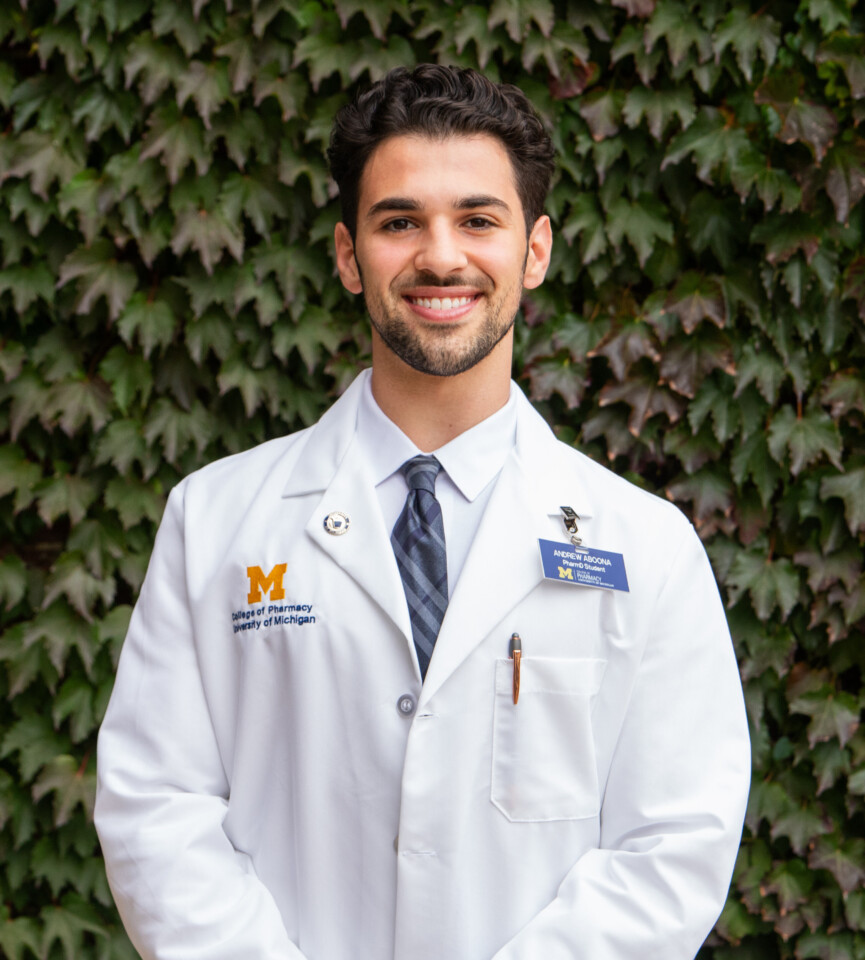
“I saw this very thin, petite girl who was showing signs that she was not feeling well. Her head was hanging down, and she was lurching back and forth before falling face-first. No one in the circle around her was helping her,” he recalls, still sounding shaken months later. “I dropped to my knees next to her. I don’t want to say I was qualified to help her, but at least I knew how to handle it based on the course I took.”
Aboona didn’t know for sure if the woman was experiencing an opioid overdose; to this day, he still doesn’t. What he did know from his Pharmacy Practice Skills I module was that Narcan would do no harm if she wasn’t overdosing. Narcan neutralizes opioids by blocking them from attaching to receptors; if no opioids are present, it will have little or no effect. It might not help, but he knew it wouldn’t hurt her.
He immediately positioned the woman on her side in a safe recovery position. I wasn’t even sure she was alive because the setting made it difficult to find a pulse,” he recalls. Checking her airway, he found that her tongue was massively swollen. “I didn’t even know if she was breathing.” Before he could do much more, she had a seizure.
“That’s when I remembered Naloxone, which we give patients in an overdose situation,” he said. “I didn’t have any on me, but I looked around and saw a guy who had a bag with him, so I asked him if he happened to have any Narcan.” He did, and Aboona quickly administered the nasal spray. “I heard a noise come from her mouth, like she was able to breathe again,” Andrew recalls, noting that he saw an improvement in the woman’s breathing and potentially saved her life.
Another thing Aboona instinctively did right was to immediately tell his friend to go find medical help. A medical team arrived right after he gave the initial dose of the drug. As he was trained in class, Aboona quickly provided the EMTs with the package label and details on what he had observed and done, so they could make a better diagnosis or administer additional Narcan if needed. 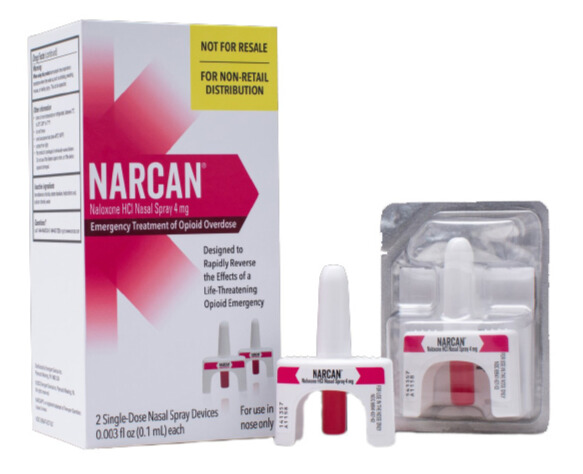
“I don’t want to say necessarily that I saved her life, but I did something to assist until the medical personnel could get there,” he reflected. “It was a powerful experience.”
The woman was taken to the hospital for follow-up. That’s an essential step, according to Caitlin Ferguson, EdD, MA, Assistant Director of Community Health and Engagement and Adjunct Lecturer, who taught the module on Narcan for Aboona’s class. “It’s not a situation where you take Narcan and you’re fine. You still need to get medical attention,” she explained. One reason is that people with a dependence on opioids may have withdrawal symptoms after taking Narcan.
After the incident, “my adrenaline was really flowing,” Aboona recalled. “It was hard to relax and enjoy the concert.” Later, after he and his friend went home and he relayed the story to his friends, the reality of what he did started to sink in. “I didn’t get her name, I didn’t know if she was alone, I didn’t know what happened afterward; I still don’t know any of that.” He did know his actions had helped someone who was in trouble — and possibly helped save her life. “I honestly still think about her so often. It’s kind of wild.”
Aboona said the incident gave him a sense of confidence in his growing clinical skills. Another concertgoer who witnessed his efforts came up afterward to tell him he handled the situation well and thank him. “I really appreciated that; it made me feel a lot better in the moment.”
The dramatic experience taught him several important lessons. First, it drove home the point that pharmacists’ skills and knowledge can come into play anytime, anywhere, outside of the professional setting. “It doesn’t only happen in healthcare settings. That’s what I learned and want to emphasize: the knowledge pharmacists have is beneficial and can be applied anywhere. What I’m learning right now, like healing wounds, healing burns, anaphylaxis, drug interactions — you have to be prepared to use it anywhere,” he said.
That’s a lesson he plans to share with his fellow students. When Clinical Professor Sarah Vordenberg, PharmD, MPH, heard his story, she knew it could make an impression on his peers. “It’s one thing to hear it in the class; it’s another thing to hear it from a classmate who was in a real-life situation where he had moments to react and put into practice what he learned,” said Vordenberg, Associate Chair of the Department of Clinical Pharmacy. “This is what we prepare our students for. I am really proud of him.”
Naloxone can be a real lifesaver. It comes in a pocket-sized nasal spray that anyone can easily administer. In Michigan, pharmacists can supply it without a prescription. It’s also available by mail order, through harm reduction agencies, in vending machines and from University Health Services on the U-M campus, and in other public settings.
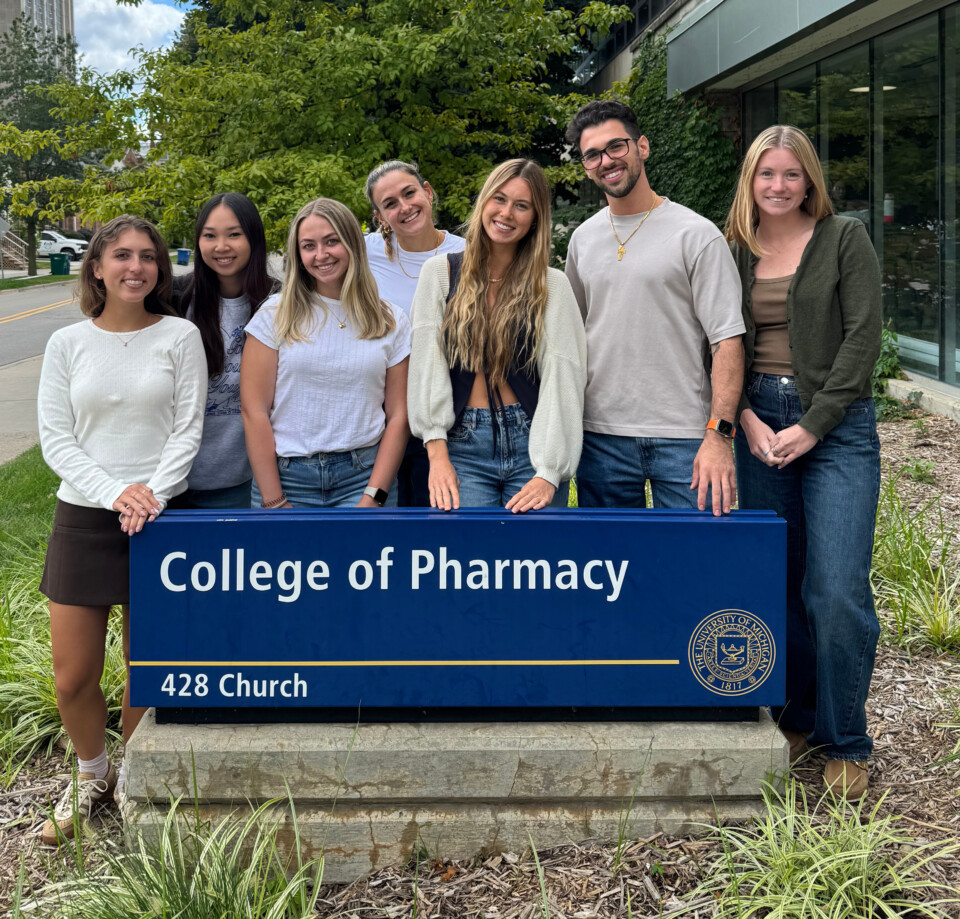 Ferguson teaches PharmD students about Narcan in a component of the Practice Skills I course that introduces them to patient counseling and interaction. In the course, she emphasizes ways to educate patients about the potential need for Narcan and its use in language that reduces the stigma around opioid use and potential overdoses. “I truly believe that everyone who has an opioid prescription should have Narcan on hand. We should be working toward normalizing the topic,” Ferguson says. People react to opioids in different ways and can accidentally misjudge dosages. “By teaching our students ways to discuss it, I’m preparing them to be an accessible resource, to meet people where they are, and provide harm reduction. I’m preparing them to save lives,” she says.
Aboona has learned that lesson in the most intense way, and it has changed his outlook. For one thing, in the future, he plans to carry Narcan, period. He is thinking about ways to encourage venues and concert promoters to ensure it’s available. “Narcan should be at every concert, it should be at every festival. There are always booths at these shows selling food, beverages and merch.” He’s asking the question, “Why isn’t Narcan available?”
When asked if this experience has influenced what he might do post-graduation, he says, “It’s a little early to tell, but because we have to do a research project, I have shifted my focus because after this, I am curious about controlled substances.” His PharmD Investigation research project will now explore these drugs and their interactions.
“In the moment, this experience was very traumatic. Having this opportunity to share my story with others is turning a stressful experience into something beneficial,” he reflected. “I can help others use this knowledge and take this experience outside of health care into real life.”
Most Recent Stories
Think Pharmacy Is Just for People? Think Again.
October 8, 2026
When Maddie Pislin first came to the University of Michigan College of Pharmacy, she knew she wanted to be a pharmacist. She just didn’t know yet what that could look like.
Growing up in Hawaii surrounded by dogs, chickens, a turtle and other pets, Maddie had considered becoming a veterinarian. But veterinary pharmacy wasn’t on her […]
Pharmacists Are Like Superheroes: Who is a Pharmacist?
September 23, 2026
Who Is A Pharmacist?
When you think “pharmacist,” you probably picture someone in a white coat, handing you a bag of medicine across the counter and asking if you have any questions about your prescription. We are so lucky to have access to these health care providers on a regular basis, especially after hours when our […]
Jennifer Hagopian on Curiosity, Mentorship and Transplant Pharmacy
August 19, 2026
When Jennifer (Jen) Hagopian, PharmD, BCPS, BCTXP, selected a solid organ transplant APPE as a pharmacy student, she wasn’t planning her future career. She simply wanted to explore an area she didn’t know much about. That one rotation changed everything.
“I just tried to pick things that I didn’t really know too much about,” Dr. Hagopian […]