
Pharmacy Student Improves Rural Access to Lifesaving Medication
By Markie Heideman | May 29, 2025
People who live in rural areas face limited access to medical care and emergency services, and as a result, face numerous health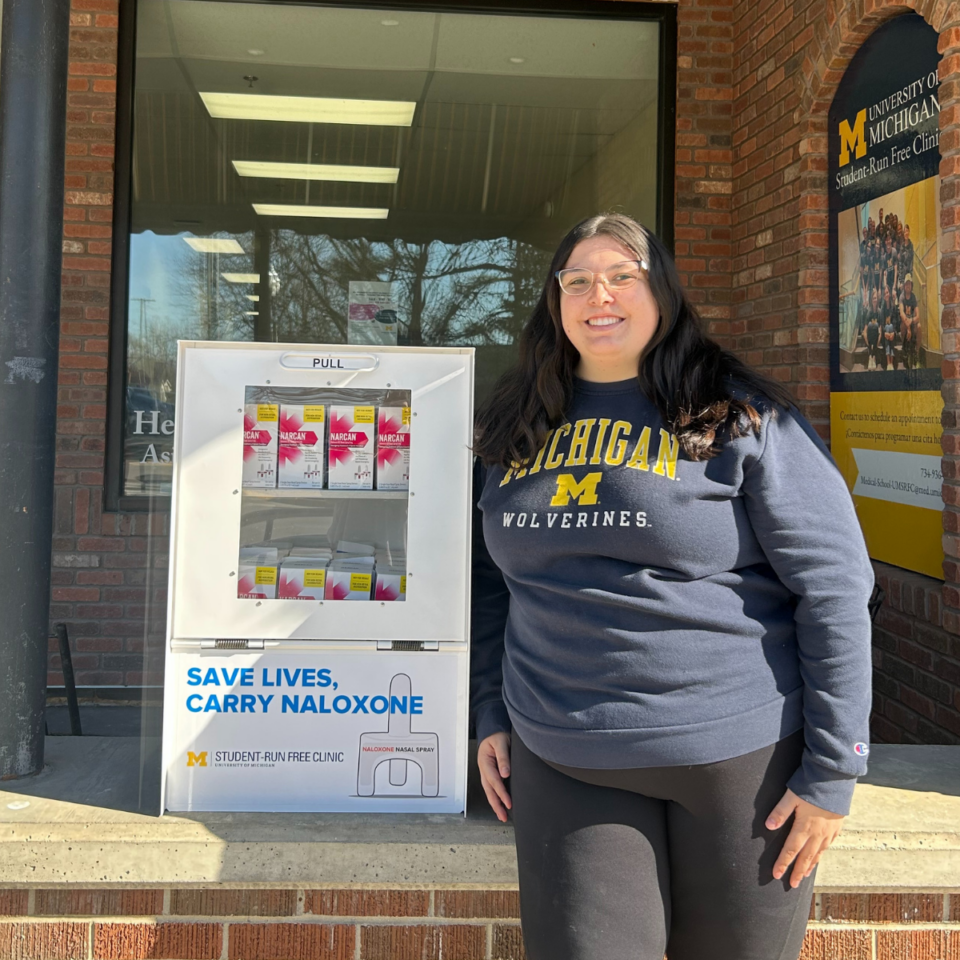 challenges compared to those in urban areas, according to the CDC. University of Michigan pharmacy, medical, nursing and social work students are working to change that – one free clinic visit at a time.
Twice a week, students from each of these areas work together to provide free health services to the rural community of Pinckney, Michigan, at the Student-Run Free Clinic. The latest addition to the free clinic: A free Naloxone kit distribution box. Naloxone is a nasal spray that helps reverse opioid overdoses, including overdoses related to heroin, fentanyl or prescription opioid medications.
These distribution boxes are becoming more and more common in urban communities like Ann Arbor, but are few and far between in rural areas – which is exactly why PharmD student Nicole Long did the work to bring this box to the clinic.
“I grew up in a rural community, so I understand that care access is limited in these areas,” Long explained. “With the opioid epidemic raging, it’s important to have access to something so simple that can save people’s lives.”
For the past four years, Long has served as one of the student directors for the clinic, and has led a number of successful initiatives including making contraception available to patients, but the addition of the Naloxone distribution box is something she considers a big win – especially since it’s available to the community 24/7.
“At the clinic, we started doing medication takeback events, and handing out Naloxone there. There were so many community members happy to have this resource, and it got me thinking about how we can offer it at all times.”
With the help of Dr. Amy Thompson, Director of Community Health and Engagement and Dr. Caitlin Ferguson, Assistant Director of Community Health and Engagement, she applied for the distribution box through Michigan OPEN, an organization focused on the prevention, treatment and recovery of substance abuse.
“I hope that this resource doesn’t just prevent opioid deaths, but also starts important conversations about addiction and opioid use in the Pinckney community. Everyone deserves a second chance,” said Long. “Addiction is very difficult and stigmatized, and asking for help is difficult for many patients.
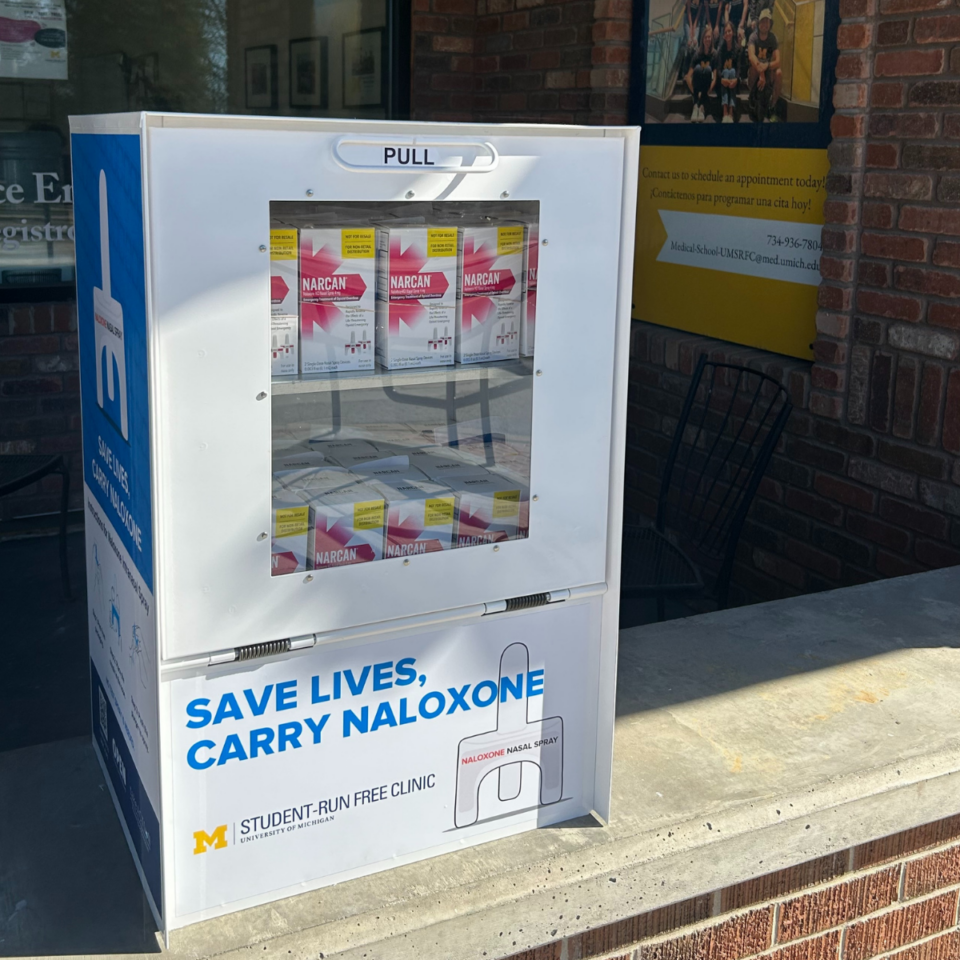 This Naloxone box project is especially a point of pride for Long because it sits on the front steps of her favorite pharmacy school involvement. Long hopes the box will bring more attention to the clinic’s services – building an even bigger bridge in this rural community.
“The Pinckney community has been great and has partnered with us on a number of initiatives. I just hope the community members can see how much the clinic cares about them.”
For Long, and many other pharmacy students, having access to interprofessional experiences like the clinic helped her understand her crucial role on a patient care team, and exposed her to the real-life impact she can have by pursuing this career path.
“Working with the Student Run Free Clinic has been the best part of my pharmacy school experience. It really gave me a connection to patient care and important real-life experiences. As pharmacy directors, we make sure medications are stocked and write policies. It has taught us to understand how pharmacy, medical, nursing and social work students work differently, but collectively, to problem solve as a care team.”
Nicole like so many other PharmD students, is a great example of making the most of their education and experience during pharmacy school. By keeping an open mind and gaining exposure to the student-run free clinic, she not only got involved in community service but also demonstrated that she could add value to the community and expand the clinic’s offerings to rural communities.
Most Recent Stories
Think Pharmacy Is Just for People? Think Again.
October 8, 2026
When Maddie Pislin first came to the University of Michigan College of Pharmacy, she knew she wanted to be a pharmacist. She just didn’t know yet what that could look like.
Growing up in Hawaii surrounded by dogs, chickens, a turtle and other pets, Maddie had considered becoming a veterinarian. But veterinary pharmacy wasn’t on her […]
Pharmacists Are Like Superheroes: Who is a Pharmacist?
September 23, 2026
Who Is A Pharmacist?
When you think “pharmacist,” you probably picture someone in a white coat, handing you a bag of medicine across the counter and asking if you have any questions about your prescription. We are so lucky to have access to these health care providers on a regular basis, especially after hours when our […]
Jennifer Hagopian on Curiosity, Mentorship and Transplant Pharmacy
August 19, 2026
When Jennifer (Jen) Hagopian, PharmD, BCPS, BCTXP, selected a solid organ transplant APPE as a pharmacy student, she wasn’t planning her future career. She simply wanted to explore an area she didn’t know much about. That one rotation changed everything.
“I just tried to pick things that I didn’t really know too much about,” Dr. Hagopian […]