
Sharma Lab

Anjali Sharma
Dr. Anjali Sharma is an Associate Professor in the Department of Pharmaceutical Sciences at the University of Michigan, where she leads the Sharma Laboratory (Translational Nanomedicine Research Laboratory). Prior to joining the University of Michigan in 2026, she was an Assistant Professor in the Department of Chemistry at Washington State University, where she founded and directed the Translational Nanomedicine Research Laboratory. Dr. Sharma earned her Ph.D. in Materials Chemistry from McGill University and completed her postdoctoral training in translational nanomedicine at the Center for Nanomedicine, Johns Hopkins University School of Medicine. Her research program integrates chemistry, materials science, nanotechnology, engineering, and medicine to develop clinically translatable, target-specific nanotherapeutics for drug delivery, gene delivery, and molecular imaging.
Lab and Research Overview
Interdisciplinary research at the intersection of Chemistry, Nanotechnology, Biology, and Medicine
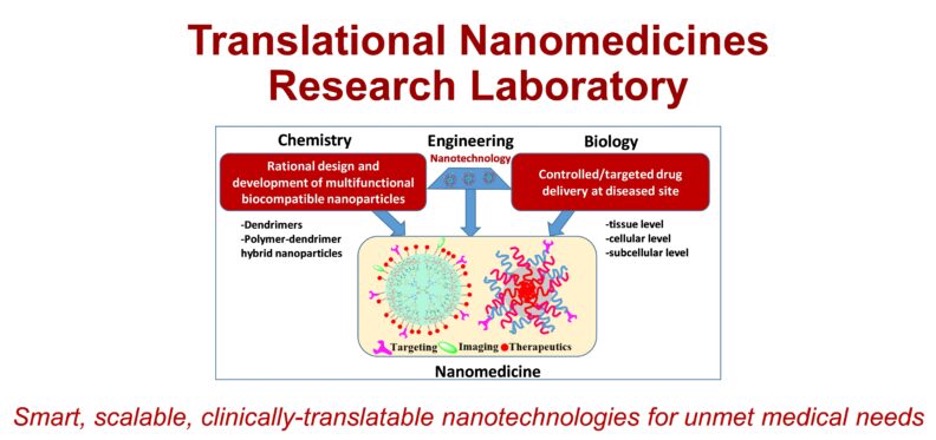
The Sharma laboratory’s research program focuses on the rational design of clinically translatable, target-specific nanomedicines for drug delivery, gene delivery, and imaging. We specialize in the rational design of functional polymeric and dendrimer-based nanomaterials that enable precise delivery of therapeutics to diseased tissues while minimizing systemic toxicity. Our goal is to transform fundamental discoveries in nanomedicine into practical therapies for diseases with significant unmet clinical needs.
Although nanomedicine has demonstrated tremendous promise over the past several decades, relatively few nanoparticle-based therapies have reached clinical practice. We believe that this translational gap often originates at the materials design stage, where overly complex architectures and synthetic strategies result in poor reproducibility, manufacturing challenges, high production costs, and batch-to-batch variability. The central philosophy of the Sharma Laboratory is to incorporate the key requirements for clinical translation, including simplicity, reproducibility, scalability, stability, biocompatibility, and cost-effectiveness, into the design of nanomaterials from the very beginning.
Our laboratory develops next-generation nanoplatforms capable of overcoming biological barriers that limit therapeutic efficacy. Poor transport across physiological barriers, including the blood-brain barrier, blood-retinal barrier, blood-tumor barrier, and other tissue-specific barriers, remains a major obstacle in treating neurological disorders, ocular diseases, cancer, inflammatory diseases, and other complex conditions. We engineer disease-responsive nanomaterials that selectively target pathological cells, immune cell populations, or intracellular organelles, enabling “magic bullet” delivery that enhances therapeutic efficacy while reducing off-target toxicity. Drawing inspiration from disease biology rather than conventional nanoparticle engineering, we develop smart, minimally invasive nanomedicines that combine simple yet powerful molecular designs with highly efficient synthetic chemistry. By leveraging biocompatible building blocks, scalable manufacturing approaches, and robust conjugation strategies, our research aims to accelerate the translation of nanotechnology from the laboratory to the clinic.
Lab Members
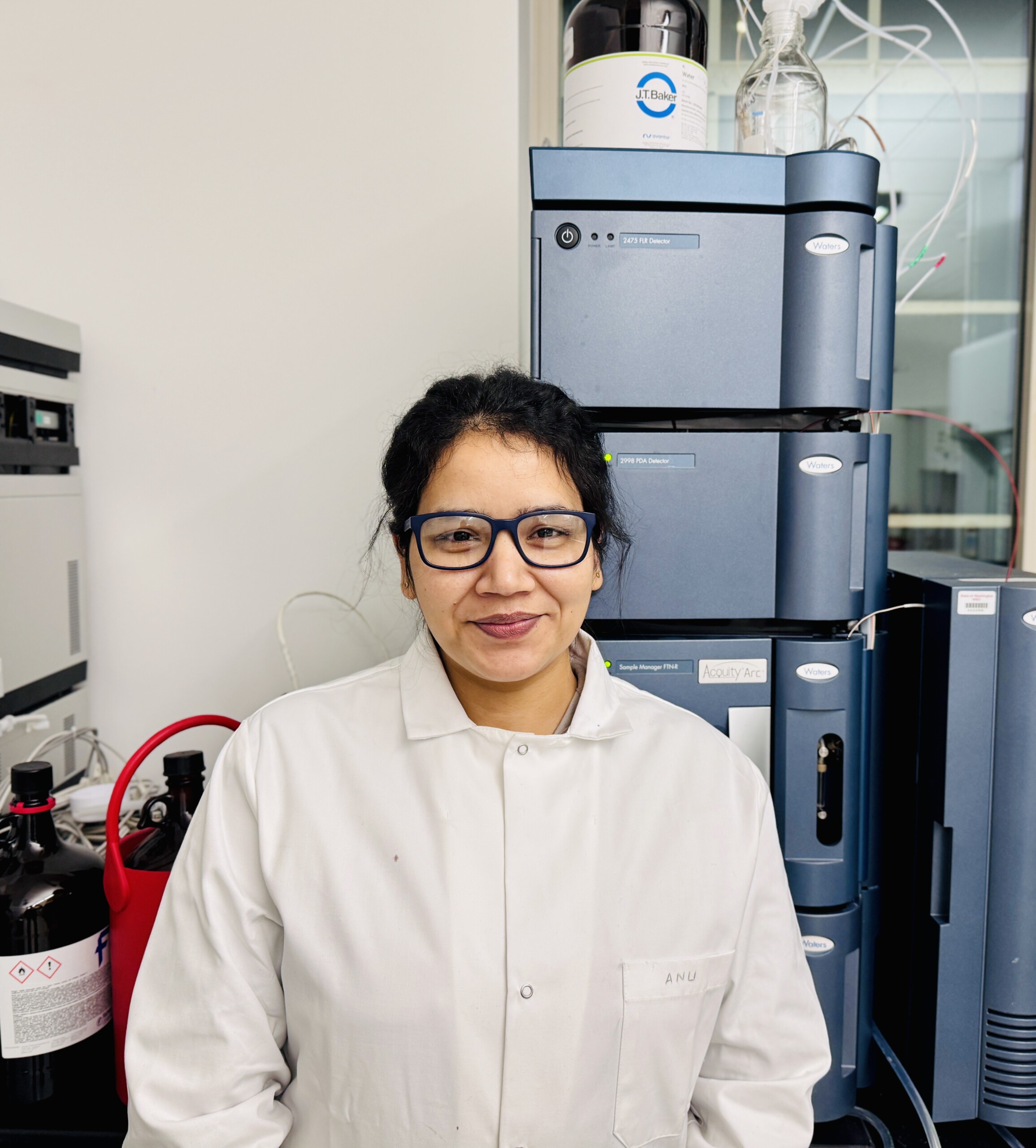
Anu Rani, PhD
Research Fellow
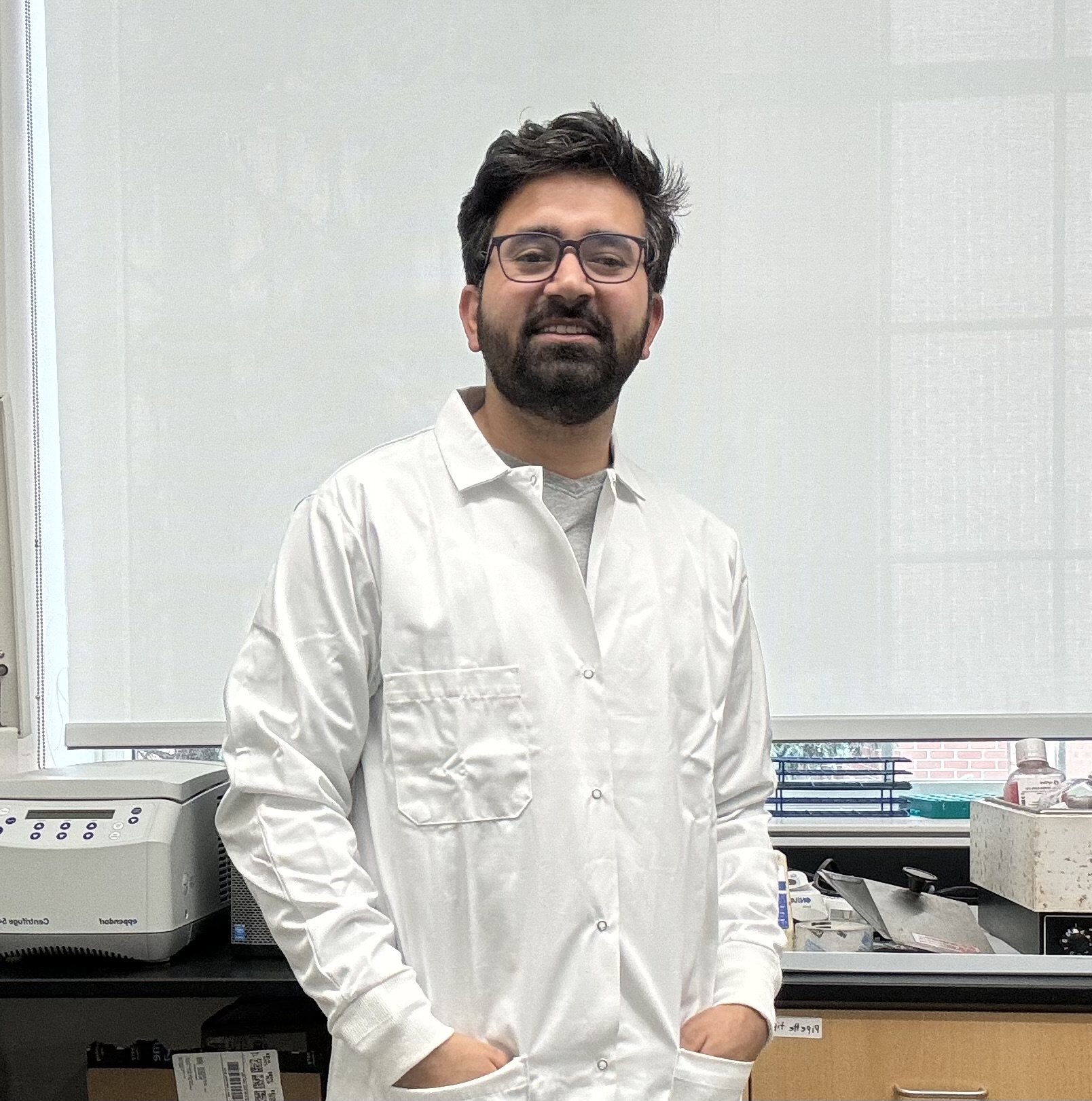
Aqib Iqbal Dar, PhD
Research Fellow

Anunay Pulukuri, PhD
Research Fellow

Anubhav Dhull
Graduate Student

Shamila Gopalakrishnan
Graduate Student

Vikrantvir Jain
Graduate Student

Roya Kashfi Sadabad
Graduate Student

Ritama Ghosh
Graduate Student

Toyin Florence Ayandokun
Graduate Student

Ananya Biswas
Graduate Student
Teaching & Resources
Cell-Targeted Drug Delivery for Brain Diseases
The ineffectiveness of drug delivery across the blood-brain barrier (BBB) has long been a significant obstacle in treating brain disorders. The BBB is a highly selective permeable barrier that protects the brain from harmful substances, but it also prevents most therapeutic agents from reaching the brain. Even if drugs or nanoparticles manage to cross the impaired BBB following brain injury or neuroinflammation, achieving sufficient uptake in key cells involved in brain diseases, such as neurons, remains a major challenge. Drug delivery to injured neurons is particularly difficult due to several factors. Neurons have a less phagocytic nature compared to glial cells. Neurons are more passive recipients of therapeutic agents, making efficient drug delivery to these cells more challenging. Moreover, neurons exist in various types, each performing specific functions in the brain. So, it is crucial to target the specific ones involved in a particular disease.
To address these challenges, we are designing novel nanomaterials with inherent targeting capabilities to target neurons and other diseased cells in the brain using minimally-invasive systemic administration. We develop these nanomaterials using highly efficient chemical transformations in a minimum number of reaction steps to reduce synthetic burden.
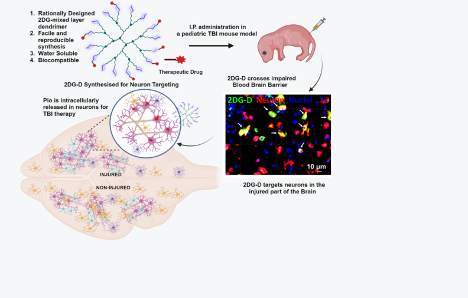
Dhull et al. Theranostics 2024
Iqbal et al. Bioengineering & Translational Medicine 2025,
PSMA-targeted Nanotherapies for Prostate Cancer
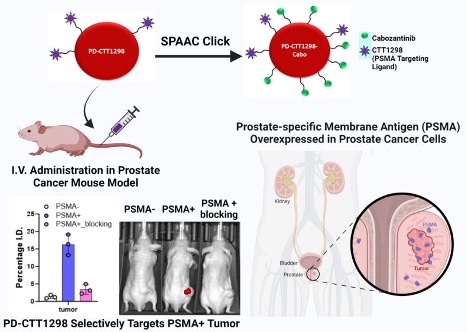
Prostate cancer is the second leading cause of cancer-related deaths among men in the United States. While early-stage treatments are often successful, with promising 5-year survival rates, the prognosis for advanced prostate cancer remains poor. Localized disease can be treated with radical prostatectomy and/or radiotherapy, but approximately one-third of patients experience recurrence. Currently, the standard of care for advanced prostate cancer is androgen deprivation therapy. However, most patients only benefit from this for less than 24 months before developing castration-resistant disease. For those with metastatic castration-resistant prostate cancer, treatment options provide only limited survival benefits.
This research area seeks to develop novel therapeutic strategies to improve outcomes for patients with advanced prostate cancer, by exploring innovative and targeted nano-approaches that go beyond the limitations of current treatments.
Dhull et al. Nanoscale 2024
Rani et al. Biomacromolecules, 2024
Convenient and Scalable Methodologies for Designing Clinically Translatable Nanomaterials
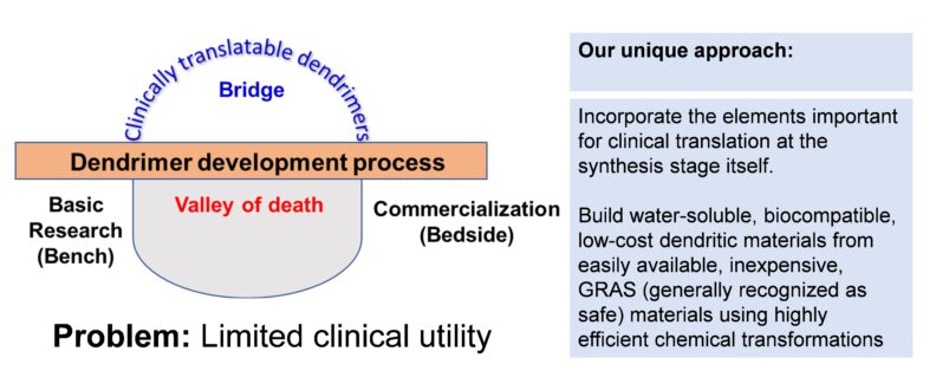
In recent years, nanotechnology has significantly advanced healthcare by providing sophisticated drug delivery systems. Among these nanosystems, dendrimers stand out as a promising class of hyperbranched and monodisperse polymers, offering exciting prospects for targeted drug delivery. Despite continuous progress in the field of dendrimers, their clinical utility has been limited mainly due to challenges associated with their chemistry. This necessitates further optimization of their design regarding defect-free structures, a high number of end groups at lower generations, precise numbers of different surface groups, batch-to-batch reproducibility, safety, cost, and commercialization. Dendrimer-mediated drug delivery often relies on the following key features: a high number of surface groups for the conjugation of optimal drug payload, high molecular weights for longer blood circulation, and precise numbers of different surface groups for the simultaneous attachment of multiple ligands such as drugs, targeting agents, or imaging dyes. Considering these criteria, this research area aims to develop convenient structural designs and facile chemical pathways to create biocompatible, water-soluble, scalable, hetero-functional, and clinically translatable dendrimer scaffolds for drug delivery and imaging applications.
Dhull et al. ACS Sensors, 2025
Iqbal et al. ACS Applied Materials & Interfaces, 2025
Castaneda et al. WIRES Nanomedicine & Nanobiotechnology; 2025
Pulukuri et al. Biomacromolecules; 2025